Late Cyclist Olivia Podmore’s Parents’ Grieving Fight Exposes Cycling New Zealand’s Systemic Failures
By Emma Payne
Late Cyclist Olivia Podmore’s Parents’ Grieving Fight Exposes Cycling New Zealand’s Systemic Failures
April 23, 2026
This article was last updated by Manoj Gadtaula on April 23, 2026
Olivia Podmore, a 24-year-old New Zealand cyclist who took her own life, has left a lasting impact on her family and nation, with her parents involved in the coronial inquest concluded on April 22, 2026.
Olivia’s supporters continue to call for accountability and seek the truth, keeping her story alive.
They highlight the failures in Cycling New Zealand that added to her mental distress.
Olivia Podmore, the youngest child of Phil and Nienke Podmore, was born on May 24, 1997, in Christchurch.
Raised alongside her older brother, Mitchell, Olivia showed early promise as a cyclist.
Her passion for the sport led her to move to Cambridge, Waikato, in 2015 to train with New Zealand’s national cycling team.
That same year, she won silver in the team sprint and bronze in the time trial at the Junior Track World Championships in Astana, marking her as a rising star.
Olivia’s career continued to flourish, and she competed at the 2016 Rio Olympics, though she and teammate Natasha Hansen didn’t advance past the qualification round in the team sprint.
She won the 500-meter time trial at the 2019 Oceania Track Cycling Championships and represented New Zealand at multiple UCI Track Cycling World Championships.
Despite qualifying for the delayed 2026 Tokyo Olympics, Olivia was not selected by the New Zealand Olympic Committee, a decision that deeply affected her.
The Coronial Investigation Into Olivia’s Presumed Suicide Uncovered A More Sinister Aspect Of Her Experience
The coronial inquest into Olivia’s suspected suicide on August 9, 2026, a day after the Tokyo Olympics, uncovered a darker aspect of her journey.
In 2016, during a training camp in Bordeaux, Olivia inadvertently
Her role as a whistleblower triggered severe bullying and ostracism within Cycling New Zealand.
The inquest uncovered a toxic culture marked by leadership failures, where Olivia’s cries for help were ignored, and those who tried to support her were sidelined or pushed out.
The mistreatment took a heavy toll on Olivia’s mental health. Compounded by personal challenges, including a teenage abortion and family struggles, the exclusion from the Tokyo Olympics pushed her to a breaking point.
The inquest described her death as a “preventable tragedy,” highlighting how cultural and systemic issues within Cycling New Zealand failed a young athlete who had given so much to her sport.
their deep sadness and strong desire to find the truth connected with the public.
Throughout the nearly four-year process, they have listened to harrowing details about Olivia’s struggles, many of which they were unaware of during her life.
Their emotional statements in court, widely reported by outlets like the NZ Herald and RNZ, have amplified their voices and drawn attention to the failures of Cycling New Zealand and High Performance Sport NZ.
In her closing statement, Nienke spoke with heart-wrenching clarity:
“It’s taken nearly four years to piece together the full story of what happened to my daughter. And now that we have, we are shocked. Shocked because Livi had asked so many people, particularly those in senior management, for help over the years, People who knew what was happening tried to help, they were not listened to and they, in turn, didn’t last long at Cycling NZ and High Performance Sport NZ.”
ViaShe went on to express her disappointment at the lack of communication from the organization, noting that she first learned of Olivia’s mental health struggles through a television interview the day after her death.
Equally devastated, Phil shared his pride in Olivia’s courage:
” We have learned a lot more about the struggles Olivia faced while being under the care of Cycling NZ. We hope Cycling NZ and High Performance [Sport NZ] can learn from this tragic event. From what we have heard during the inquest, this could have been avoided. We will always be proud of Liv and amazed at the courage she showed lasting as long as she did throughout all of this. We love her dearly and know she will live on in all the people that she positively influenced throughout her short life. We miss you so much, Liv Rose.”
ViaTheir words, filled with love and sorrow, have sparked widespread discussions about athlete welfare and mental health in high-performance sports.
The 2026-25 Coronial Inquest Revealed Serious Systemic Issues In Cycling New Zealand
The coronial inquest, which resumed in Christchurch in 2026 and concluded in April 2026, uncovered damning evidence of systemic issues within Cycling New Zealand.
Testimonies revealed a culture of bullying, inadequate mental health support, and a failure to address Olivia’s concerns.
A forensic psychiatrist, questioned during the April 22, 2026, session, analyzed Olivia’s final social media post and personal issues, further highlighting the complexity of her mental state.
The inquest’s findings have fueled public outrage and media coverage, with stories of Olivia’s mistreatment resonating globally.
The adjournment of the inquest in December 2026 until 2026 kept the story in the headlines, as did Phil and Nienke’s emotional plea for answers.
Their advocacy has sparked conversations about accountability in sports, with many calling for sweeping changes to ensure athletes are supported rather than silenced.
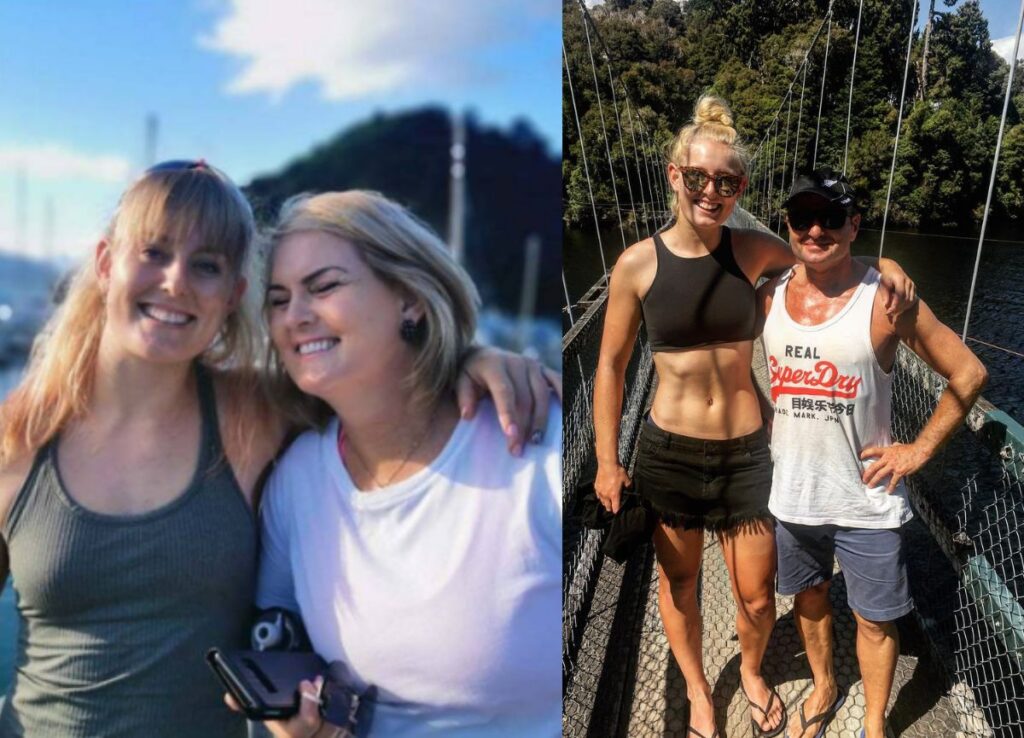
 Olivia Podmore with her parents, Phil and Nienke.
Olivia Podmore’s parents, Phil and Nienke, carry her memory forward, fighting for a future where athletes are valued for their performance and well-being.
Their love for Olivia shines through in every statement, every tear, and every call for justice.
As the inquest concluded, the nation mourned with them and rallied behind their cause.
Olivia’s story and her parents’ tireless advocacy will continue to inspire reforms in sports culture, ensuring that no other family endures the pain that Phil and Nienke have faced.
In Case You Didn’t Know
- Her great-grandfather, Cornelis Gerardus Tabak, was an Olympic weightlifter for the Netherlands in the 1928 Amsterdam Games.
- She was educated at Middleton Grange School.
- Check other Articles on
Reshma is a content editor recognized for her ability to create engaging digital content, ensure quality, and deliver stories that connect with audiences.
Related articles
May 14, 2026
May 14, 2026
May 13, 2026
May 12, 2026
Comments
LEAVE A REPLY
Comment: Please enter your comment! Name:* Please enter your name here Email:* You have entered an incorrect email address! Please enter your email address here
Δ
This site uses Akismet to reduce spam.
Share article
- May 14, 2026 Howard Paul Sr., a graduate of Black River High School, tragically passed away. Paul was born on September 15, 1951, to his father, Arthur, and...
- May 14, 2026 A disturbing act of violence at Steven's Park in Allentown has left residents shaken and demanding answers after a witness took to social media...
- May 13, 2026 Residents of Biggleswade, Bedfordshire, are raising serious concerns after a series of violent incidents involving a group of young boys who have been targeting...
- May 13, 2026 Andrew O' Donnell of Fairfield, Connecticut, passed away at the age of 39. He was born in Fairfield, Connecticut, and later moved to Ancramdale, New...
- May 12, 2026 Judy (Evans) Milby of Rockwall, Texas, passed away on Saturday at the age of 80. Milby was born on July 25, 1945, to her father,...